
Deepavali: Festival of Lights
Illuminate Your Life: Celebrating Deepavali, the Festival of Lights! Deepavali, also known as Diwali, stands as one of the most universally cherished and joyously celebrated Hindu festivals, transcending borders and…
Why students may be interested
Illuminate Your Life: Celebrating Deepavali, the Festival of Lights!
Deepavali, also known as Diwali, stands as one of the most universally cherished and joyously celebrated Hindu festivals, transcending borders and uniting communities wherever Hindus reside. While each of the four main Hindu festivals—Holi, Raksha-bandhan, Dussehra, and Deepavali—holds unique significance, Deepavali shines brightest with its national and international importance.
This radiant festival unfolds over three consecutive days, following the lunar calendar, each day brimming with its own special rituals and meaning.
The Three Days of Deepavali: A Journey of Purity, Light & Prosperity
Day 1: Dhan Teras (Kartik Krishna Paksh Triodashi – 13th day) Deepavali commences on Dhan Teras. This auspicious day is traditionally a time for new beginnings, when people purchase new utensils and jewellery. It’s believed that by doing so, they invite Goddess Maha Lakshmi, the deity of wealth and prosperity, into their homes.
Day 2: Narak or Yama Chaturdashi (14th day) The second day is dedicated to Narak or Yama Chaturdashi. In the evening, Lord Yama, the god of death, is worshipped by lighting a four-wick lamp in the middle of the courtyard, a prayer for long life. By this day, homes and shops sparkle, having been thoroughly cleaned and whitewashed—a beautiful symbol of purity and knowledge.
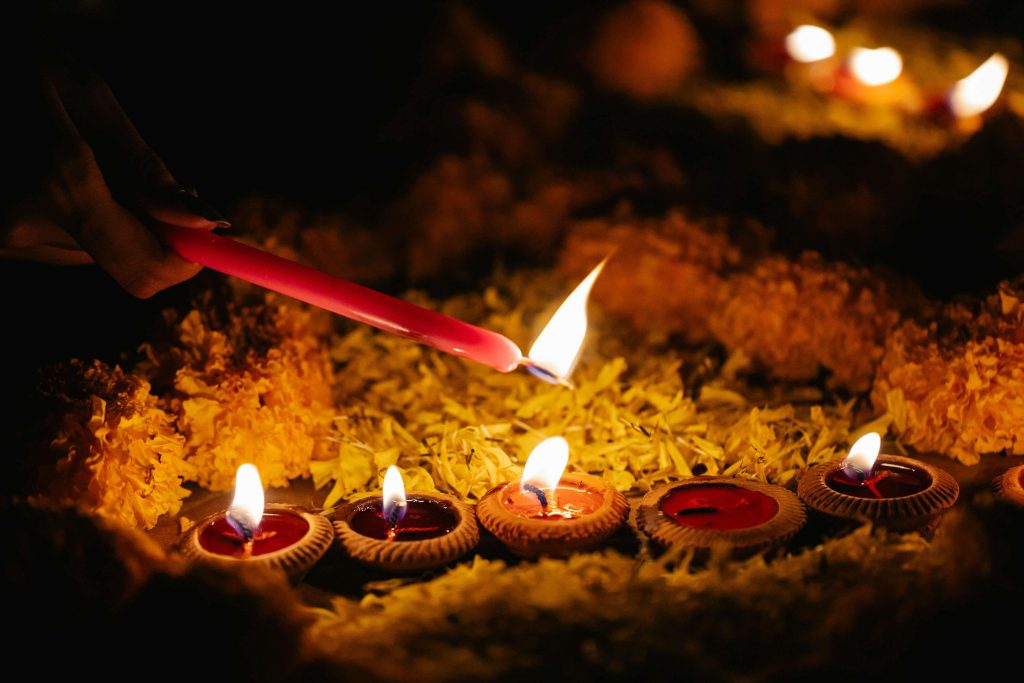
Day 3: Amavashya (15th day of the dark fortnight) – The Main Celebration! The most significant day of Deepavali is Amavashya. As darkness descends, rows upon rows of lamps are lit, banishing the night and symbolizing the triumph of light over darkness. This is the central day for worshipping Goddess Maha Lakshmi. The act of lighting lamps is profound: it represents the removal of ignorance (darkness), which gives rise to desires, anger, greed, and violence. By igniting the lamp of wisdom and invoking Goddess Maha Lakshmi—the giver of wisdom, wealth, peace, and prosperity—we seek to fill our lives with her blessings.
Invoking Blessings: Worship and Rituals
Deepavali is a powerful opportunity to worship:
What to expect
- Maha Lakshmi for prosperity.
- Lord Ganesha for success.
- Goddess Sarasvati for pure knowledge.
Simple Deepavali Puja (Worship) Guidelines:
Before beginning, gather all necessary items (samagri). Worship is an act of respect and service to the Divine.
Preparation:
- Prepare your worship area (Vedi) as shown in the diagram, ensuring you are facing East or North.
- Always sit on a mat for worship.
- Keep a pot of water handy.
- Arrange fresh flower garlands: yellow for Lord Ganesha, red for Maha Lakshmi, and white or pink for Goddess Sarasvati.
- Place idols of Lord Ganesha, Maha Lakshmi, and Sarasvati in their designated spots. If idols aren’t available, a supari (betel nut) can represent the deity. Idols help in visualizing the divine presence.
Mantras (Chant with reverence): If you can chant full mantras, please do. Otherwise, use these powerful ‘beej’ (seed) mantras:
- For Lord Ganesha: Om Gan Ganapataye Namah!
- For Goddess Maha Lakshmi: Om Hrim Maha Lakshmiye Namah!
- For Goddess Sarasvati: Om Aim Sarasvatiye Namah!
Aachman (Purification): Take water three times in your right hand and sip it, symbolizing the cleansing of mind and body. Then, light the lamp and incense (agarbatti). Take a small amount of water, a flower, rice, and a coin in your right hand. Offer a prayer that you are performing the Deepavali Puja with your family and ask the Lord to accept your offering, then place them on the Vedi.
Chandan (Sandal Paste): Prepare sandal paste in two small containers: one for applying to family members’ foreheads (mix with a few rice grains for ‘teeka’), and one for the puja itself.
Invoking the Deities: All family members should hold a flower, pray to the Gods and Goddesses, and invite them to take their seats. Offer these flowers at the feet of the Lords. If you have idols, gently place each in a deep plate and pour water four times over them, symbolizing the washing of their feet, hands, mouth, and body. Then, offer a small drop of Panchamrit five times.
Panchamrit (Sacred Nectar): Combine ½ glass milk, 3 tablespoons yogurt, ½ teaspoon ghee, 1 ½ teaspoons honey, and 2 teaspoons sugar. Mix thoroughly.
Dressing & Adorning the Deities: After offering Panchamrit, carefully wash the idols with clean water and dry them with a clean cloth, continuously chanting the beej mantras. Offer mauli (red thread) as symbolic clothing. Apply sandal paste, rolli, avir, and gulal, all while chanting the beej mantras. Apply some rice grains to the idols’ foreheads. Offer garlands or a single flower to each idol. Light the dhup or incense and wave them three times from right to left. If you have itr (rose water or perfume), sprinkle a few drops. Finally, show the lamp to the idols three times by waving your right hand.
Naivedya Bhoga (Food Offering): Sprinkle water on your hands (for purification), then place sweets (prasad) in front of the idols. Offer them with a prayer: “Oh Lord, You are the Giver; we have nothing to offer but this food prepared with devotion. Please accept it, so that it may become sacred Prasad for us.”
Fruits: Offer a plate of sweet seasonal fruits, again as Prasad.
Dravya Dakshina (Monetary Offering): It is customary to offer coins during puja. This act symbolizes offering our most cherished possession, seeking detachment from its bondage, and praying for its purity.
Arati and Pradikshina (Lamp Ceremony & Circumambulation): Conclude the worship by performing Arati. With a lighted lamp in your right hand, wave it at least seven times in front of each idol while singing the Arati hymns for Lord Ganesha, Goddess Maha Lakshmi, and Goddess Sarasvati. If time is limited, prioritize the Arati for Goddess Maha Lakshmi.
May this Deepavali bring you and your loved ones immense wisdom, wealth, peace, and prosperity!
More about this event
Organised by
KOI involvement
External opportunity
Public Event runs this event; KOI has selected it as a useful opportunity for students.
- Program category
- Cultural Feature Events
- Event type
- Cultural Celebration